Extract Summit
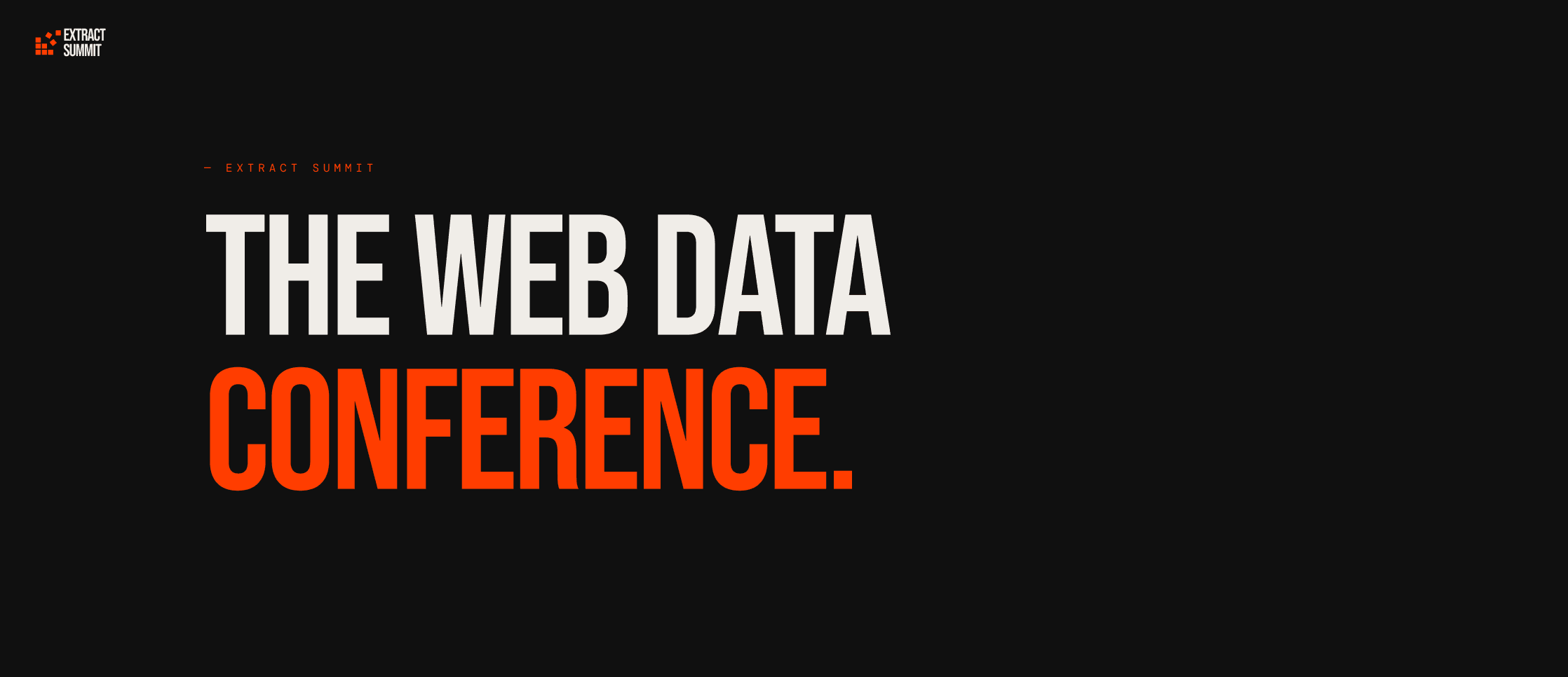
A full rebrand, asset suite and website front end, designed in a weekend, launched inside two weeks.
The problem in front of me
The brief, in full: "We need to rebrand, redesign the website, and launch in two weeks."
That was it. No positioning document, no creative direction, no asset list. Extract Summit, Zyte's industry conference, with an immovable date, a tired identity, and a website that needed to sell tickets from the moment it went live.
The normal process for a rebrand is measured in months: discovery, moodboards, three directions, stakeholder rounds, refinement, rollout. There was no version of that process that fit in fourteen days.
Two weeks isn't a resourcing problem. It's a decision problem.
Zooming out
Where does the time actually go in a rebrand? Not the designing. The deciding. Every stakeholder round costs days of waiting and produces compromise, and a two-week timeline has no room for either. So the critical move wasn't working faster. It was collapsing the decision loop to one person: me.
I took ownership of every brand decision, direction, identity, type, colour, tone, and committed to showing finished work rather than options. Not because other opinions don't matter, but because at this timescale, a strong singular vision executed well beats a committee-softened one delivered late. Decide and inform, applied to creative work.
The second move: design the system before the assets. A rebrand isn't a logo, it's a set of rules. Get the rules right in the first hours, and every asset after that is derivation, not invention. That's what makes a weekend possible.
What I built
In one weekend: the identity, the full asset suite, and the working front end of the site.
The identity. Wordmark, type system, palette and graphic language, built as a rule set from the start so it could flex across everything from the website hero to a speaker slide without me touching each artefact individually.
The assets. The complete suite the event needed: web graphics, social templates, speaker and sponsor assets, all derived from the system so they were consistent by construction rather than by inspection.
The front end.The site itself, designed and built as working code rather than mockups awaiting a handoff. By Monday morning there was no gap between "the design" and "the website": they were the same thing, live and clickable.
The remaining days went where they should: content, CMS integration so the events team could own updates without me, ticketing, and polish on the moments visitors actually see.
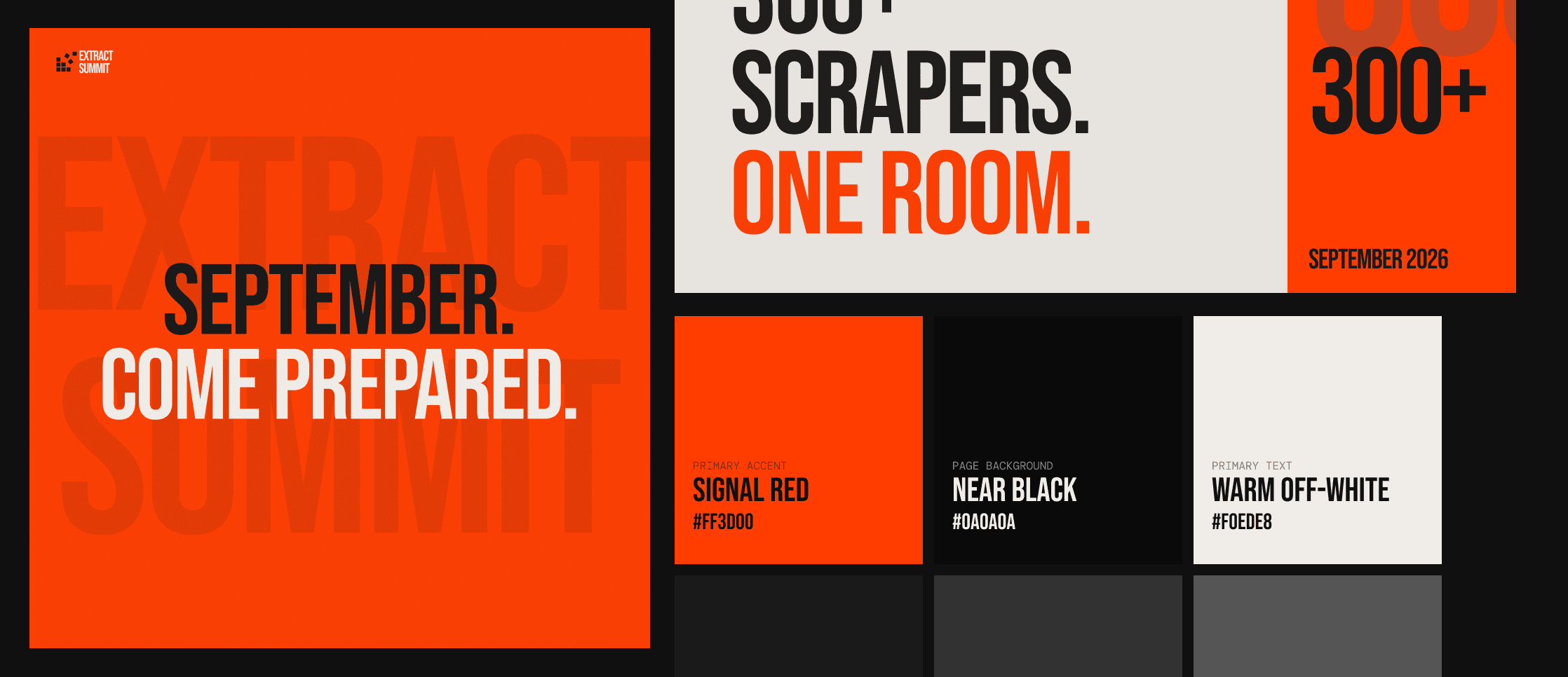
Designed in code: the mockup and the website were the same artefact

The trade-offs
Speed like this isn't free. It's bought with deliberate trades:
- OwnOwnership over consensusOne person made every brand call and stood behind all of them. The trade is accountability: if the brand missed, there was exactly one name on it. I took that trade knowingly, because diffused ownership at this pace produces neither speed nor quality.
- ShowFinished work over optionsNo three-directions presentation. Stakeholders saw a resolved brand, live on a real site, which is a far better object to react to than moodboards. Feedback shifted from "which direction" to "ship it".
- RulesSystem first, assets secondHours spent defining rules before touching a single asset felt slow on day zero and paid for itself twenty times over. Derivation scales; invention doesn't.
- FocusPolish where it's seenFidelity was budgeted like money: the hero moments visitors judge got obsessive attention, the long tail got the system's defaults. Uniform polish is how deadlines die.
The outcome
The brand and site launched on deadline and the event ran under an identity that felt designed, not assembled. Because the identity was built as a system with the CMS handed to the events team, it kept working after launch: new speakers, sponsors and content slotted into the rules without me in the loop.
The quieter outcome was organisational. It reset expectations about what one designer with full ownership can deliver, and it became my standing evidence for a conviction the rest of this portfolio keeps returning to: the bottleneck is almost never the craft. It's the decision-making around it.
Given two weeks and a one-line brief, I didn't ask for more time. I took ownership of every decision, built the rules first, and let the system do the scaling. Craft moves fast when nobody's waiting for permission.